
Missing details. A request arrives without a clear product code, quantity or unit. Your team has to chase the details before preparing a quote.
Electrical wholesalers.
Quote with less admin.
Automation systems that connect quote requests, reviewed drafts and follow-up tracking around your existing tools.
Where quotes get held up.
Repeated data entry. The same information moves between email, spreadsheets and sales tools. Each handoff adds work and another opportunity for a correction.
An unclear next step. A draft waits for review or a follow-up has no owner. The request stays open while the customer waits for an answer.
Connect the work between tools.
Quote-request handling
Bring requests into a structured record, prepare quote drafts for review and keep follow-ups visible. Product rules, pricing and approval checks are agreed around your process.
Handoffs and data quality
Check required fields, assign the next action and route exceptions to the right person. Keep a clear source of truth across the tools your team uses.
Monitoring and reporting
Make failures and unresolved work visible. Review handling time, corrections and overdue handoffs against an agreed baseline.
Software by Synex
Meet Relay.
Electrical supply planning and shortage recovery for manufacturers and suppliers. Connect exact requirements, inspected stock and the decisions behind a recovery.
Implemented application. Demonstrations available; production launch pending.
Explore Relay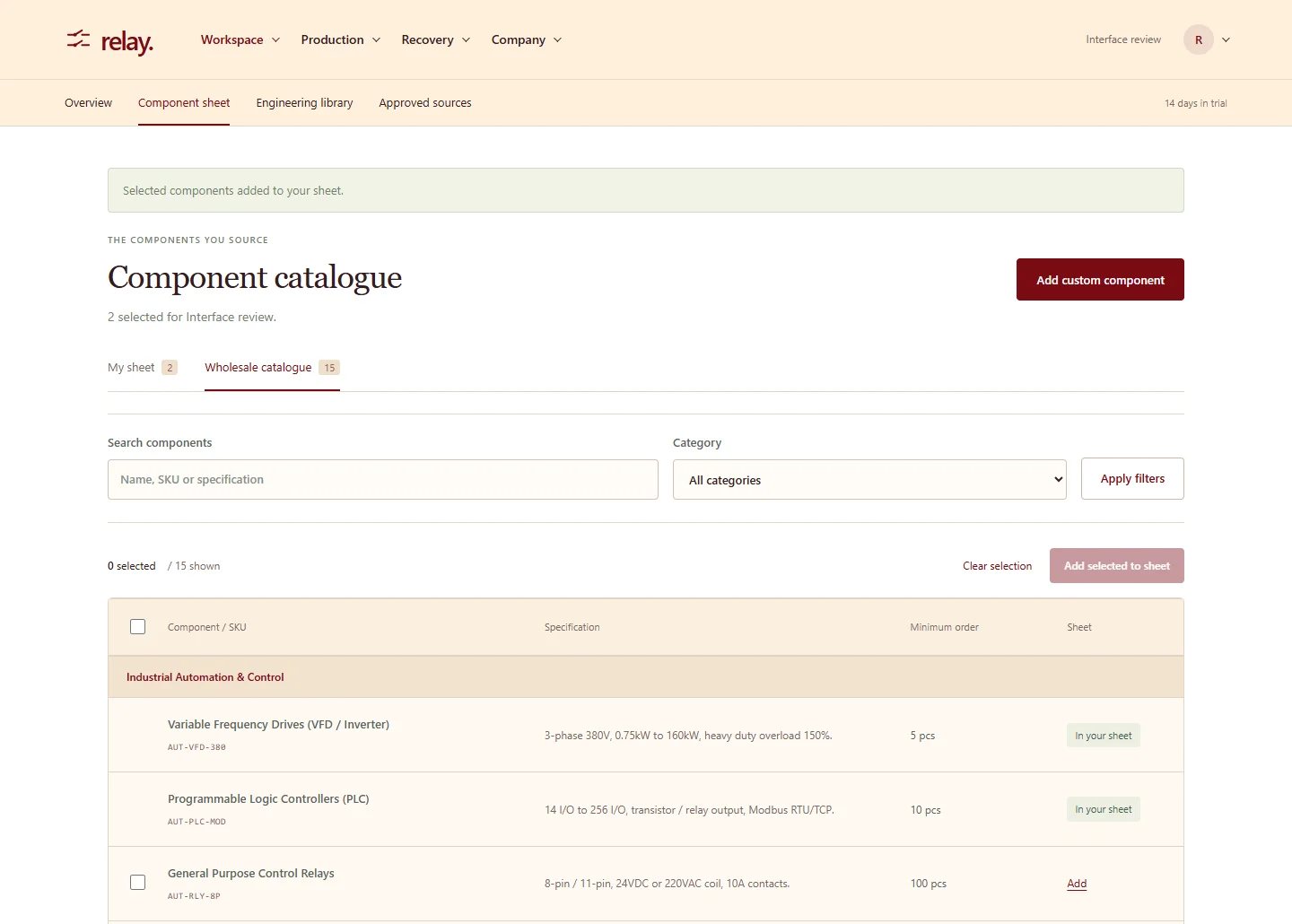
See a quote take shape.
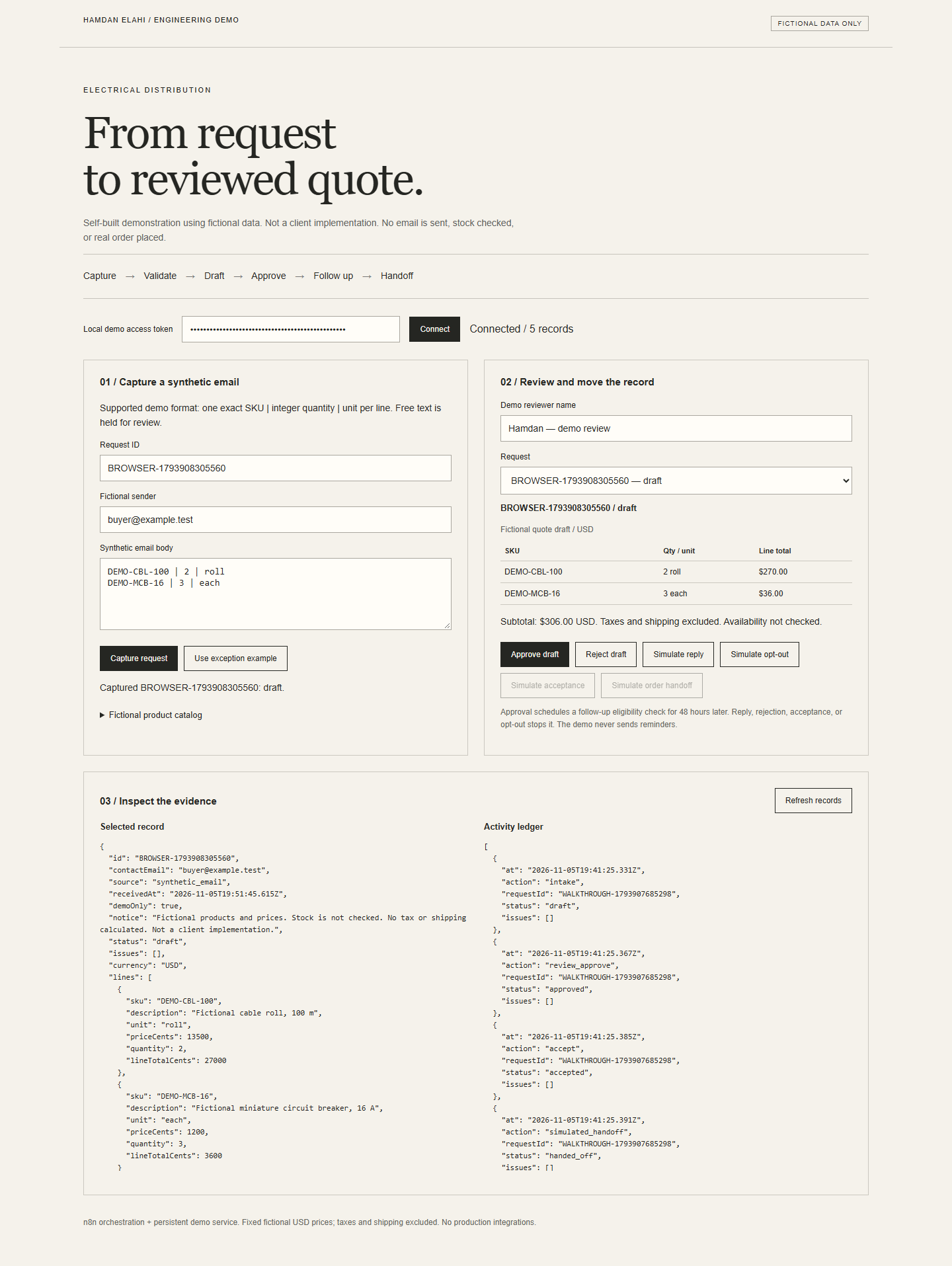
Product codes, quantities and units are checked before a quote draft is prepared. The draft then goes through review before approval.
The demonstration also shows follow-up eligibility and an approval-gated order handoff.
- Required-field and product checks
- Review before approval
- A visible record of the next step
Try RFQ Desk
Review a request, select catalog products and generate a quotation PDF in the interactive prototype.
A clear path to delivery.
Read the delivery processUnderstand. Walk through the work with the people doing it. Identify the recurring bottleneck, current tools and decisions that need human judgment.
Scope and establish a baseline. Agree the boundaries, fees, milestones and acceptance checks. Record current handling time, rework or missed handoffs so there is something meaningful to compare.
Build and test. Connect the agreed tools in stages. Test representative inputs, exceptions and failure paths; ask your team to review outputs before launch.
Launch and explain. Agree a rollout and fallback plan. Explain everyday operation, review responsibilities, alerts and the documentation your team needs.
Monitor and review. Review reliability and agreed measures against the baseline. If performance falls short, reassess and test changes; recommend retirement or handover when appropriate.
Your automation blueprint.
Start with the bottleneck, agree the system and deliver it in scoped stages. Your blueprint sets out the integrations, responsibilities, fees and milestones before the build begins.
If you only need one or two workflows, we can plan a smaller project.
What we agree together
- The tools to connect and the decisions your team will review
- How we will test the system and measure improvements
- Who handles each stage, the fees and payment milestones
- What your team needs to run the system after launch
Care is part of the plan
Monitoring, maintenance and hosting care are included in your blueprint. Your proposal explains the coverage, duration, usage limits, response arrangements, third party costs and anything outside the agreed scope.
Work with the Synex team from the first conversation through testing and review. Your team stays involved in the decisions that matter.
Meet the Synex teamBefore we talk.
Who is this for? The initial focus is established electrical wholesalers and distributors with recurring administration or slow handoffs. Owners, managing directors and operations leaders can explore fit. Region, company size and budget are assessed individually.
Will this work with our software? Feasibility depends on your software’s APIs, export options, permissions and usage limits. These are checked before a build is agreed. No replacement of your ERP or accounting system is assumed.
How much will the team need to do? A process owner needs to explain the workflow, supply suitable sample data and review test outputs. We agree staff involvement, training and a staged launch to limit disruption.
How are accuracy and approvals handled? Validation rules and exception paths are scoped together. Quote pricing, availability and commercial decisions stay subject to the agreed human review. Automation is not a promise of zero errors.
What does it cost? Scope, investment and milestone invoices are agreed in a proposal. Delivery may span weeks or months. There are no fixed website prices or promised savings; one- or two-workflow projects are separately scoped offers.
What care is included? Monitoring, maintenance and hosting care are included in the blueprint payment. The proposal defines coverage, duration, usage allowances, response arrangements, third-party charges and exclusions. This is not unlimited service or an implied 24/7 response.
How will we know it is worthwhile? Agree a baseline and measures such as handling time, correction rate and unresolved handoffs. Compare representative periods after launch and include operating costs. Improvements are goals to measure, not guaranteed results.
What happens after the discovery call? If there is a fit, the possible next step is a 45-minute working session covering scope, feasibility, investment and engagement options. A purchase is not required.