
Thoughtful follow-up,with rules built in.
A recovery sequence with event checks, contact limits, inventory rules, and cancellation after purchase.
- BUSINESS AREA
- E-commerce
- PRIMARY PLATFORM
- n8n
- PROJECT TYPE
- Self-built system
The work behind
the workflow.
Abandoned checkouts can lead to missed sales opportunities, but uncontrolled follow-up can also produce duplicate messages, excessive contact, or offers that do not fit inventory and margin constraints.
A connected
sequence of steps.
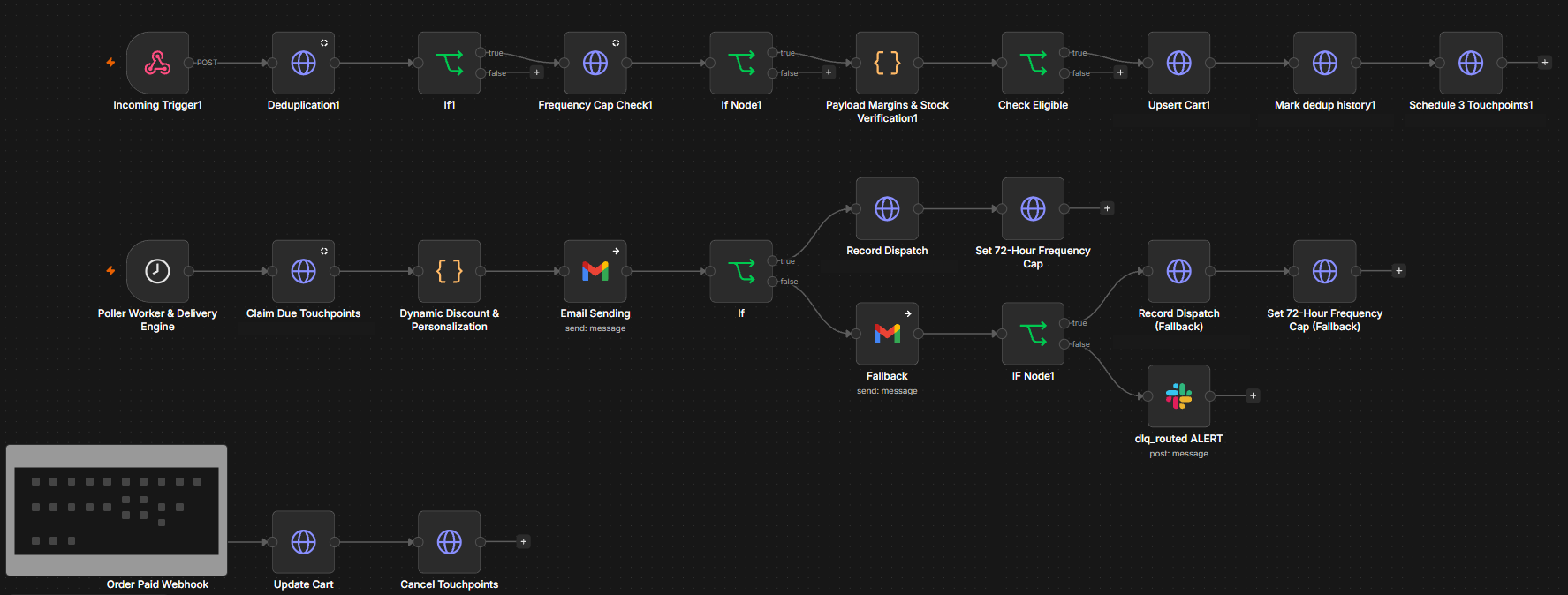
The documented workflow receives checkout events, checks duplicates and contact frequency, validates product inventory and margin rules, and schedules recovery messages. It calculates discounts dynamically, cancels pending messages after a purchase, and sends failure alerts.
Follow the process.
The sequence below reflects the implementation described in the project handoff. It does not represent a live execution.
Receive a checkout event
An incoming checkout event enters the recovery workflow.
Check the event and contact rules
Duplicate-event checks and contact-frequency limits determine whether to continue.
Apply product and offer constraints
Inventory and margin validation inform the recovery path and discount calculations.
Schedule the recovery sequence
The system schedules the applicable customer messages.
Respond to purchases and failures
Purchase events cancel pending follow-ups; failure paths trigger alerts.
A checkout is abandoned
Rules first. Follow-up second.
Illustrative architecture. See the real workflow screenshot below for the captured editor view.
A closer look at the build.
A real screenshot of the self-built demonstration. The process diagrams above explain the steps; this is the captured workflow canvas.
What the system
is designed to produce.
- A recovery-message schedule
- Rule-based offer calculations
- Cancellation of pending messages after purchase
- Failure notifications
Where this could help.
A similar workflow could support more consistent checkout follow-up while applying business constraints. No recovered-revenue figure or conversion uplift is claimed for this demonstration.
NO MEASURED CLIENT RESULTS CLAIMEDClear about what’s shown.
Clear about what isn’t.
This case study draws on the supplied project handoff and workflow screenshots in the automation portfolio. The screenshot supports the visible workflow structure; it does not independently establish production use, client adoption, or behavior under every failure condition.
- Customer consent, permitted contact practices, and storefront event reliability must be established for a real deployment.
- Duplicate checks and cancellation logic are documented features, not guarantees under every possible race or failure condition.
- The recovery timeline on this website explains the architecture; it is not a real customer communication log.